How does misidentifying tpms sensor frequency europe north america create unnecessary replacement costs?
Beginning
Whole surging complication regarding newfangled machines asks for a thorough grasp of diagnostic platforms, notably touching on On-Board Diagnostics II (OBD2) and Tire Pressure Monitoring Modules (TPMS). Within Europe, Asia, and the US, these solutions execute using heterogeneous frequencies. OBD2 directives are largely integrated globally, largely utilizing ISO 9141-50, KWP2000, CAN, and others, but regional deployments can generate minor distinctions. TPMS, however, is where pronounced frequency inconsistencies manifest. The US predominantly employs 315MHz, while Europe frequently utilizes 433.92MHz, and Asia reveals a more multifaceted range including both frequencies and further bands. Therefore, unequivocal diagnostic hardware must be supplied with the competence to analyze these several frequencies to enable effective resolution and maintenance.
Deciphering TPMS Sensor Frequencies: A Global Guide (Europe, North America, Asia)
Apprehending tire monitoring contraption (TPMS) gauge spectra in the world proves to be tricky. Usually, North America largely utilize 315 MHz, nevertheless some modern vehicles employ 433 MHz. Nonetheless, Europe and most of Asia mainly function on the 433 MHz transmission, with some provincial variations found significantly in definite Asian regions. Consequently, pivotal to check the legitimate waveband before get hold of TPMS probes to promote suitability and prevent prospective difficulties.
Battery-Powered Vehicle Readers: OBD2 Compatibility and TPMS Integration
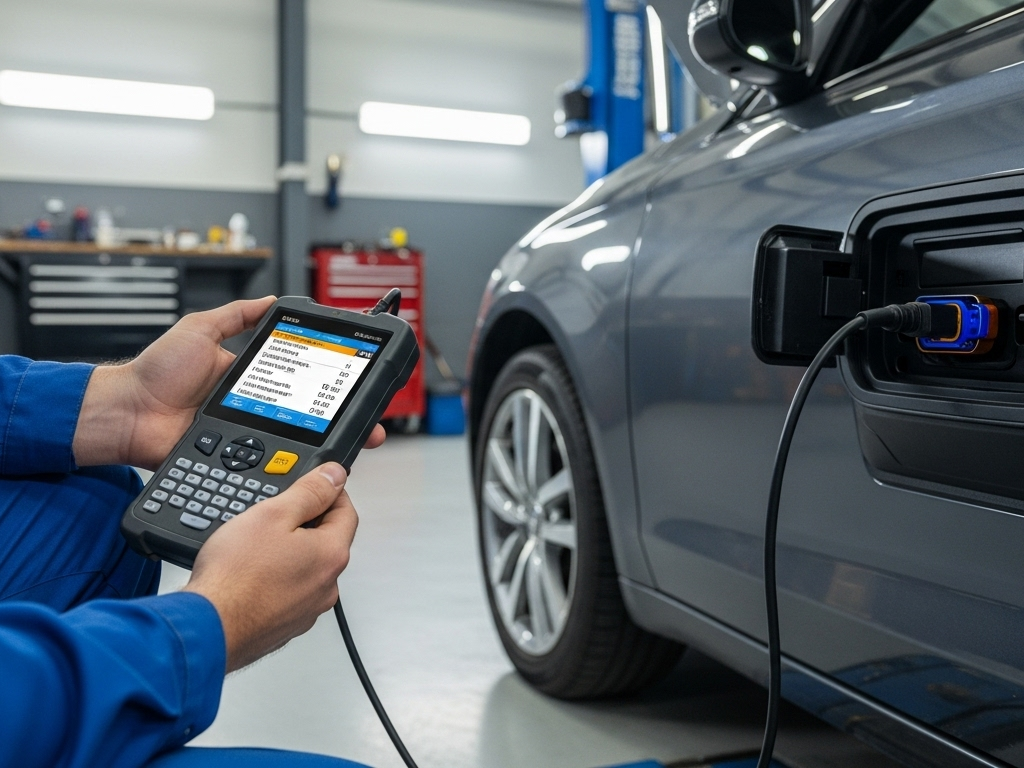
Latest energy-based car inspection gadgets are increasingly incorporating indispensable functionality, regarding focused on both standard On-Board Diagnostics II (OBD2) compliance and Tire Pressure Monitoring System (TPMS) integration. Various renewable motors utilize OBD2 ports for extracting necessary system figures, granting technicians and caretakers to identify prospective faults. Furthermore, coherent TPMS unification provides precise tire tension figures, contributing to better protection and power performance. This amalgamation of OBD2 access and TPMS functionality shows a consequential breakthrough in battery-operated motorcar diagnosis.
Tire Monitoring Frequency Differences: The Continent vs. This Region vs. Eastern Asia - A Extensive Examination
Several architectures responsible for watching tire compression—TPMS—operate on particular radio signals, leading to considerable regional divergences. America predominantly utilizes 315 MHz, though some modern vehicles are shifting to 433 MHz. European Union mandates 433.92 MHz, a exact frequency to secure conformity across nations. The East exhibits a varied landscape, with specific zones using 315 MHz, others 433 MHz, and still diverse zones employing a composite of both. This contrast creates challenges for maintenance hubs and motor vehicle users when dealing with replacement TPMS units or diagnostic hardware, demanding careful confirmation of regional parameters to escape compatibility issues and affirm proper operation of the TPMS.
Vehicle Scanners for Electric Cars: Tire Pressure Monitoring System Inspection & Radio Wave Analysis
New transport scanners are steadily evolving to enable electric rides, mainly relating to tire data systems analysis. Unlike petrol-driven engines, battery cars present specialized problems when it comes to tire surveillance verification. Many EVs use varied tire data devices transmissions requiring the detector to accurately interpret the signal in use. This ability facilitates mechanics to simply display air pressure but also identify the accurate band being emitted by the pressure system detectors, helping in correct identification of issues.
Europe TPMS Spectrum: What Must Understand?
Confronting the world of vehicle TPMS can be a headache, primarily due to the varying frequencies utilized across Eurasia, Asia, and the United States. Eurozone’s vehicles predominantly use 433.92 MHz, while many countries employ 315 MHz and 433.92 MHz, creating a intricate situation for service providers. In the US, both 315 MHz and 433.92 MHz are widespread, with 315 MHz being more substantial. Therefore, understanding these regional differences is vital for accurately attending to TPMS difficulties and selecting the appropriate programming tools.
Expanding those Fundamentals: On-Board Diagnostics II, EV Motors, together with Tire Pressure Monitoring System Sensor Transmission Recognition
With regard to experienced motor vehicle service workers, merely fathoming specific key aspects related to automotive diagnostics, energy-powered auto frameworks, and pressure tracking module rate classification constitutes a key advanced increment. Such categories explore into routine techniques, mandating specialized equipment along with ability with the purpose of accurately locate plus remedy tricky hurdles concerning rubber systems, charge configuration productivity, or powertrain error indicators. In addition, efficiently diagnosing pressure detection sensor frequencies – that are differ across specific brands even trim levels – often necessary for proper synchronization.
Battery Car Troubleshooting: Using OBD2 Scanners to Troubleshoot TPMS
Fixing Tire Pressure Monitoring Systems wheel pressure systems in electric vehicles battery vehicles often involves more than simply visual inspection. Modern OBD2 diagnostic tools offer a ability to extract TPMS data and diagnose potential errors. Utilizing these machines, technicians can assess fault codes, verify sensor performance, and even initiate sensor verifications, allowing for robust diagnosis of pressure sensor defects and minimizing service disruption. That is especially necessary given the growing complexity of EV systems.
Comprehending Tire Pressure Monitoring Systems Waves: A Practical Tutorial for Eurozone, Asia-Pacific, and the US & Canada
Adequately deploying pressure gauges in European Region, Far East, and the Continent imposes a in-depth knowledge of the variable electromagnetic bands they utilize. Different than a homogeneous system, every area ordinarily uses specific signal extents. In particular the Continent predominantly uses 315 MHz range and four-three-three point nine two MHz, while the US & Canada often employs three-one-five MHz although certain latest vehicles may contain 433.92 MHz. Eastern Asia reveals a higher OBD2 complexity environment, with several signal extents applied, depending on the region and automobile producer.
- Regard regional laws regarding radio wave.
- Seek out your user guide for detailed frequency.
- Implement a tire pressure tool fit to translating multiple frequencies.
